Treatments
Oral and maxillofacial surgery
Our oral and maxillofacial surgery department diagnoses and surgically treats disorders and diseases of the soft tissues of the mouth, including the tongue, cheeks, lips and salivary glands, as well as the teeth, jaws and jaw joint.
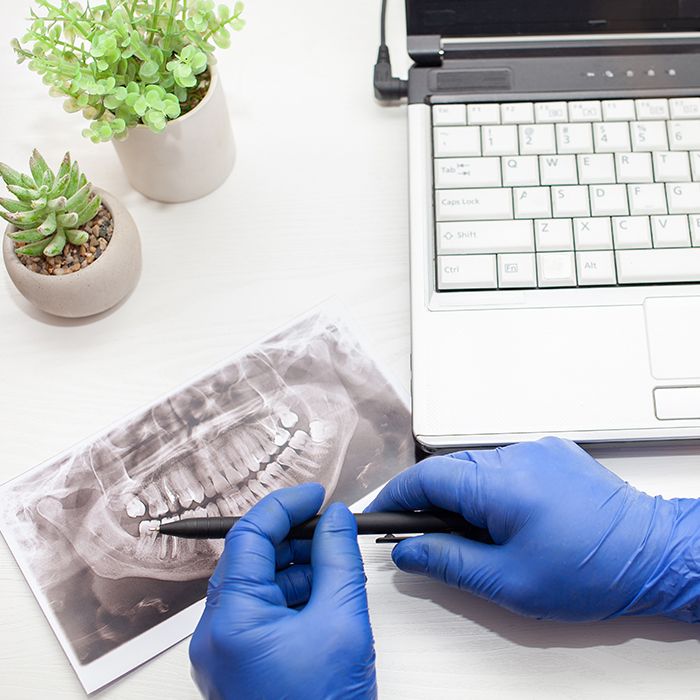
Jaw cysts most commonly develop because of infection or impacted teeth. Following tooth decay, bacteria may travel through the root canal into the bone. Bone around the root tip is destroyed and granulation tissue forms as a barrier in response to bacterial invasion. This tissue helps stop the bacteria from spreading. However, without dental treatment, continuing infection allows the area of bone destruction to expand. Patients may experience little discomfort or pain. Cysts can develop silently until reinfection, swelling or pressure on anatomical structures causes symptoms. This may take months or years, after which lasting damage and deformity of the jaw and face may occur. The main risk is extensive damage to surrounding tissues when treatment is delayed; in some cases, cystic lesions can undergo malignant change.

The upper jaw contains cavities called sinuses above the back teeth. Following removal of upper molars or conditions such as sinusitis, the sinus may extend downwards and reduce the available bone. There may be insufficient bone for an implant. Sinus lifting fills the deficient area with synthetic bone graft material. Open or closed techniques may be used, with the surgeon selecting the approach according to the available bone. The procedure can make implant treatment possible by creating adequate bone height and width. Implants can then replace the missing teeth. An autogenous bone graft is another technique used where substantial bone has been lost or the restoration above an implant would otherwise be too long. Rejection or failure of a large graft is a concern; using the patient's own bone reduces this risk and improves the chances of success.
Apical root resection
Apical resection is surgical removal of the inflamed root tip within the bone. Root canal treatment alone may sometimes fail to resolve the infection, and an abscess or bone destruction around the root tip may continue to grow. Removal of damaged tissue and the root tip may then be necessary. It can be considered for a cyst at the root tip; root anatomy that prevents complete canal treatment; a restoration that cannot be removed and prevents access; a broken instrument that needs surgical removal; continuing pain despite root canal treatment; or a fracture of the apical third of the root within the bone.
Synthetic bone graft
Grafting with synthetic bone material is a technique we use to restore areas with deficient bone. It may be performed at the same time as implant placement or beforehand.
Oral and maxillofacial surgery · Frequently asked questions
General patient information. Your examination determines diagnosis and the treatment suitable for you.
When is oral surgery needed?
Surgical tooth removal and some jaw conditions require surgical assessment. Symptoms, examination and imaging guide the choice of procedure.
What should I tell the surgeon beforehand?
Share your medicines, allergies, medical conditions and previous surgery experiences. Do not stop any medicine, including blood thinners, on your own.
Does oral surgery always require general anaesthesia?
No. Many procedures use local anaesthesia. The extent of surgery and the patient's circumstances determine whether sedation or general anaesthesia is appropriate.
Which symptoms after surgery need attention?
Contact your clinician for persistent bleeding, worsening pain, fever or swelling. Seek emergency help for difficulty breathing or swallowing.