Treatments
Impacted tooth surgery
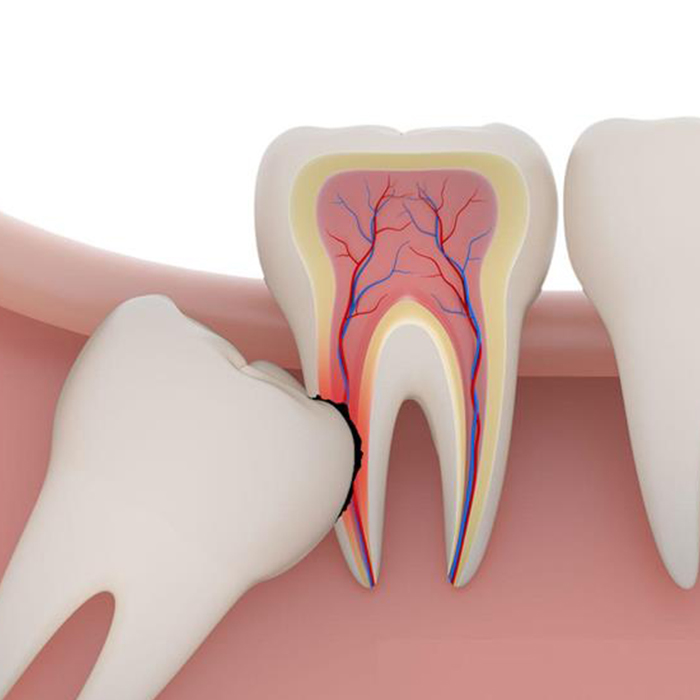
Third molars, commonly called wisdom teeth, are expected to erupt around the age of twenty but frequently remain impacted or erupt only partially. Changes in eating habits, including greater consumption of cooked and softer foods, are described as contributing to smaller jaw dimensions. The last tooth may therefore lack space to erupt.
Impacted teeth can develop cysts or infection over time and damage the surrounding bone. The original clinic content recommends six-monthly panoramic X-ray assessment of impacted or partially impacted teeth so that developing risks can be identified and treated early.
Our oral surgeon assesses the risk through a clinical examination and X-rays and provides guidance. Risk assessment allows intervention before an adverse problem develops. Infection or a cyst can damage nearby bone, making recovery after surgery more painful and difficult. The existing text recommends regular six-monthly checks even when there are no symptoms.
When should a wisdom tooth be removed?
- Tooth decay
- Effects on the second molar
- Pericoronitis
- Crowded teeth
- Pain
- Cyst formation
- Cheek biting
Impacted tooth surgery · Frequently asked questions
General patient information. Your examination determines diagnosis and the treatment suitable for you.
Must every impacted wisdom tooth be removed?
No. Teeth without problems may be monitored. Disease, pain or damage to neighbouring teeth may justify removal.
Why is imaging needed before removal?
It helps assess tooth position and nearby structures. The clinician chooses the appropriate imaging.
Can removal cause numbness?
Teeth close to nerves may carry a risk of altered sensation in the lip, chin or tongue. Your individual risk is explained beforehand.
When should I contact the dentist afterwards?
Seek prompt assessment for persistent bleeding, worsening pain or swelling, fever or a bad taste.